Guide 03 · Installation
From survey to switch on: installing a heat pump or A/C
What happens, in what order, what it costs, and the paperwork that protects you and your grant.
The six steps
- 01
Check your home
Find your MPRN and BER. Homes built from 2007 onwards are often heat pump ready; older homes may need insulation first.
- 02
Technical assessment
An SEAI registered technical advisor measures your home's heat loss and confirms it is suitable, or tells you what to upgrade.
- 03
Apply & get approval
Apply for your grants online. Do not start any work until approval comes through.
- 04
Choose an installer
Get at least two quotes from SEAI registered contractors. Each should include a room by room heat loss calculation and system sizing.
- 05
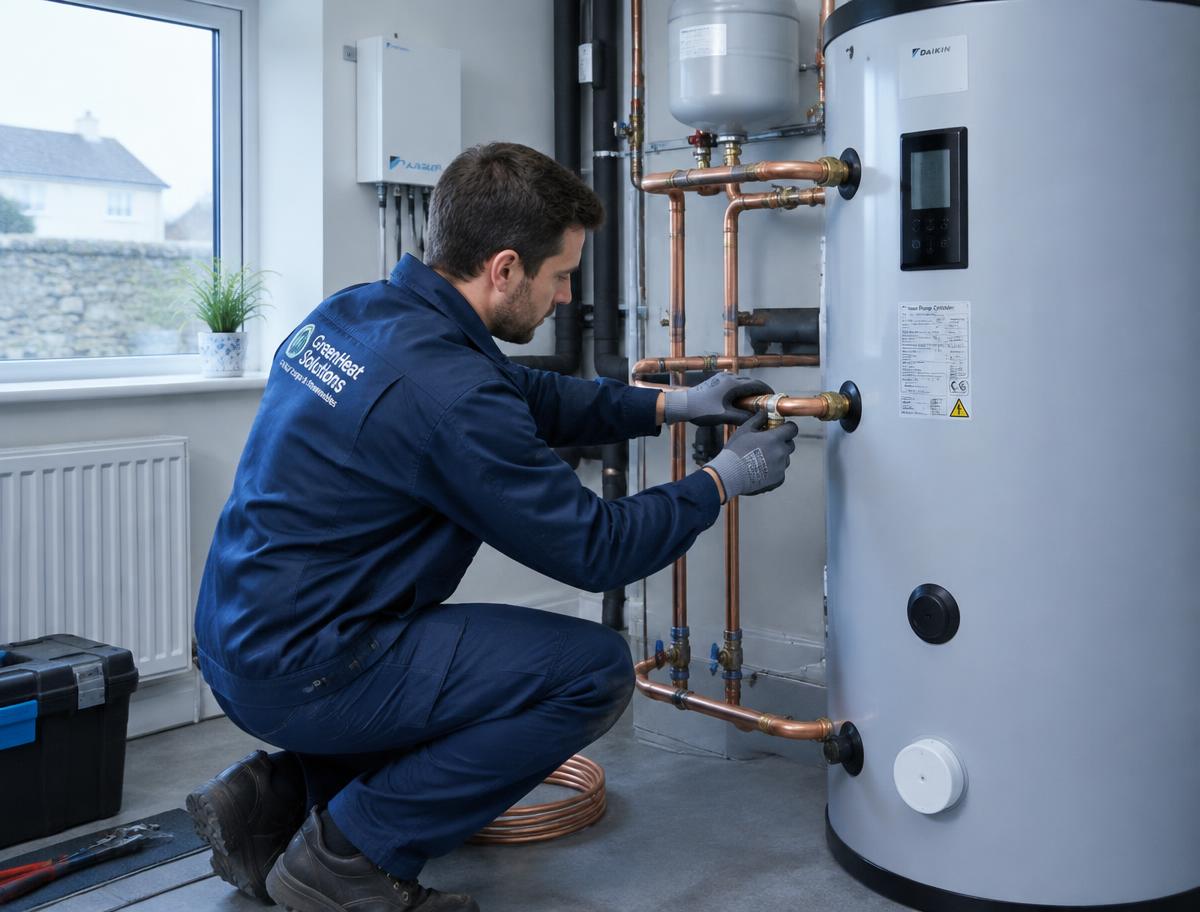
Installation
Outdoor unit, hot water cylinder, controls and any radiator upgrades. Usually two to five days for a typical house.
- 06
Commission & claim
The system is commissioned, an electrician certifies the work, a post works BER is done and you submit your Declaration of Works to get paid.
What it typically costs
SEAI's median costs for a whole home air to water heat pump, before grants:
| Home | Median cost |
|---|---|
| Detached house | €17,000 |
| Semi detached / end of terrace | €16,700 |
| Mid terrace house | €16,000 |
Radiator upgrades, insulation and electrical work can add to that. Run your own numbers in the savings calculator.
Do I need planning permission?
Most domestic air source heat pumps are exempted development, as long as:
- The unit (or two units combined) is no larger than 2.5 m²
- It is at least 50 cm from the edge of the wall or roof it's mounted on
- Noise at the nearest neighbour's boundary is no more than 43 dB(A)
- It is not placed to the front of the house
- Ground level is not changed by more than 1 m
The exemptions don't apply to protected structures, architectural conservation areas or some special amenity areas. If in doubt, ask your county council for a Section 5 declaration (around €80). Apartment owners will also need management company consent.
Not sure what you need?
See each system inside a home like yours, with what it does and what it costs.
Refrigerants and F gas rules
Anyone who connects, fills or services refrigerant pipework, every split A/C unit and many heat pumps, must hold an F gas certificate. EU rules are phasing down high impact refrigerants, so many new heat pumps now use natural refrigerants such as propane (R290).
Electrics
The electrical connection must be done by a registered electrical contractor who issues a completion certificate. Larger systems may need a supply upgrade from ESB Networks, your installer should check this early.

Installing air conditioning or air to air units
A wall mounted split unit needs an outdoor condenser, a short insulated pipe run, a condensate drain and its own electrical spur. A single room is usually a one day job. Size it to the room, not the price: oversized units cycle on and off and waste energy.
Look after it